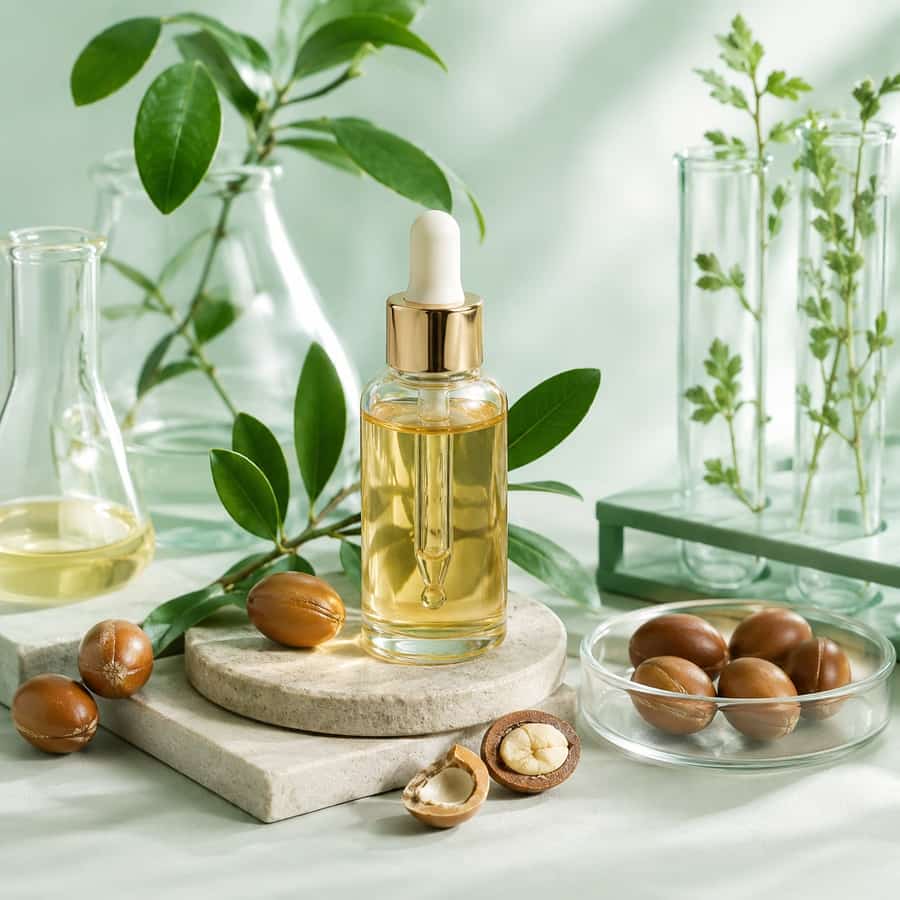
Argan oil is one of the most recognizable ingredients in modern hair care — and for good reason. Extracted from the kernels of Moroccan argan trees, this lightweight oil is rich in vitamin E, oleic acid, and linoleic acid. In serum formulas, it delivers moisture, frizz control, and high-shine finish without the heavy, greasy feel of richer oils like coconut or castor. This guide covers how argan oil behaves in hair serums, which concerns it supports, how to dose it by texture, and which products use it effectively.
How argan oil works in hair serums
Argan oil’s fatty acid profile — primarily oleic acid (roughly 45%) and linoleic acid (roughly 35%) — allows it to partially penetrate the cuticle layer while also forming a light occlusive film on the hair surface. This dual action adds moisture from within and seals it from without, which is why argan-based serums feel nourishing rather than just coating.
In serum formulations, argan is typically blended with silicones, esters, and polymers that improve spreadability and reduce application weight. A pure argan oil and an argan-infused serum are not the same product — the serum version is engineered for daily leave-in use with less buildup risk. Pure argan oil works better as a pre-shampoo treatment or a finishing drop on dry ends.
Argan oil also carries antioxidant properties from its vitamin E content. On color-treated hair, this can help protect the strand from environmental oxidative stress that accelerates fading — though argan alone is not a substitute for dedicated UV or color-protection serums.
Benefits and limitations
Argan-based serums deliver immediate shine, reduce flyaways, and improve detangling on damp hair. They work across most hair types and are generally safe for color-treated and chemically processed hair. The ingredient provides mild heat buffering when layered under styling tools, though dedicated heat protectants with tested temperature ratings are stronger for daily flat-iron use.
For dry, dull, or frizz-prone hair, argan serums address the moisture deficit that makes cuticles lift and scatter light unevenly. The result is smoother texture and a glossy finish that reads as healthy even before long-term repair occurs.
Pure argan-heavy formulas can weigh down fine or low-density hair if overapplied. In high humidity, oil-based serums without humidity-blocking polymers may not control frizz as effectively as silicone-dominant alternatives. Quality varies widely across price points — look for argan oil (or Argania spinosa kernel oil) listed in the top half of the ingredient list, not buried below preservatives and fillers.
Argan oil by hair type
Fine hair: Limit to one to two drops on dry ends or a rice-grain amount on damp mid-lengths. Ouai Hair Oil and similar lightweight blends are better choices than heavy oil treatments. Never apply to the scalp or roots.
Thick and coarse hair: Can handle a dime-sized dose distributed in sections. Argan helps soften the rough texture that makes coarse hair feel perpetually dry. Moroccanoil Treatment and Kérastase Elixir Ultime are popular choices in this category.
Curly and coily hair: Argan adds slip for detangling and seals moisture into high-porosity strands. Apply on damp hair before cream or gel. On 4C textures, use sparingly — a little argan goes a long way on tightly coiled patterns.
Color-treated hair: Argan is color-safe and helps seal the cuticle to slow moisture loss and fading. Pair with sulfate-free shampoo to preserve both the oil deposit and your color investment.
Which concerns argan oil supports
Argan oil appears most often in serums targeting:
Browse the concern guides above for hair-type-specific product comparisons, or open a guide that matches your hair type.
How to use argan oil serum
Apply on clean, towel-dried hair for leave-in benefits. Dispense a small amount — pea-sized for shoulder-length hair — warm between palms, and distribute through mid-lengths and ends using a pressing motion. For dry-hair finishing, use one drop rubbed between fingertips and smooth over flyaways only.
If your routine includes a water-based frizz serum, apply that first on damp hair, then add argan on ends if they still feel dry. Reversing the order traps the serum beneath oil and reduces absorption.
Start with less than you think you need. Argan is easy to overapply because the immediate shine feels satisfying — but excess oil flattens roots and attracts dust. Evaluate over one full wash cycle before increasing dose.
Argan oil vs other hair oils
Coconut oil penetrates deeply but is too heavy for most daily leave-in routines. Jojoba oil mimics scalp sebum and works well for fine hair but offers less frizz control. Grapeseed and almond oils are lighter alternatives but lack argan’s proven track record for shine and smoothness.
If your serum already lists argan prominently, you likely do not need a separate pure argan oil — doubling up increases buildup risk without additional benefit.
Common mistakes with argan serums
Applying to roots and scalp on non-scalp formulas causes greasiness within hours. Using argan as a heat protectant substitute — most argan serums lack tested thermal polymers. Overapplying on fine hair because the shine looks good initially, then wondering why hair goes flat by midday. Buying based on the word “Moroccan” on the label without checking whether argan oil appears meaningfully in the ingredient list.
Top products with argan oil
1) Moroccanoil Treatment Original
The product that popularized argan oil in hair care ($34, 4.7 stars from 52,000+ reviews). This original formula tames frizz and flyaways instantly on damp or dry hair, adding silky shine without weighing down most textures. It works across curly, thick, color-treated, and straight hair types. The premium price per ounce is the main drawback, along with a scented formula that does not suit everyone. Best for anyone who wants the benchmark argan treatment with a proven track record.
2) Kérastase Elixir Ultime L’Huile Originale
Kérastase’s multi-oil blend ($49, 4.7 stars, 6,100+ reviews) combines argan with other nourishing oils for mirror-like shine on thick and curly hair. It is a salon-quality finishing oil that tames frizz and adds luminous gloss — especially effective on coarse textures that resist lighter serums. The premium price is justified if you use small amounts and need a high-end finishing product for special occasions or daily polish.
3) Ouai Hair Oil
Ouai’s lightweight oil-serum hybrid ($32, 4.6 stars, 9,800+ reviews) delivers glass-like shine and frizz control in a formula light enough for fine and straight hair. It softens ends, reduces flyaways, and carries the brand’s signature scent. The 1.5 fl oz bottle is small for the price, but the lightweight texture means each bottle lasts longer than heavier alternatives. Ideal for fine and color-treated hair that needs argan benefits without root flatness.
What to look for on the label
Look for “Argania spinosa kernel oil” or “argan oil” in the top half of the ingredient list. Marketing phrases like “Moroccan-inspired” or “with argan” do not guarantee meaningful concentration.
Check whether the formula is oil-dominant (heavier, better for thick hair) or serum-blended with silicones (lighter, better for fine hair). For color-treated hair, confirm the product is sulfate-compatible and does not contain drying alcohols above the oil ingredients.
Smart buying checklist
Before purchasing, evaluate fit through five filters:
- Ingredient concentration: Is argan oil listed prominently, not at trace levels?
- Texture tolerance: Can your hair handle this serum’s weight at the recommended dose?
- Routine compatibility: Does the application method fit your wash and style schedule?
- Concern match: Does the formula target your primary goal, not just feature the ingredient?
- Cost per month: Will this remain practical after the first bottle runs out?
Argan oil sourcing and quality
Not all argan oil is equal. Cosmetic-grade argan (Argania spinosa kernel oil) is cold-pressed from Moroccan argan tree kernels and appears in quality serums at meaningful concentrations. Culinary argan and diluted “argan-infused” products use lower grades or trace amounts. Fair-trade and organic certifications indicate ethical sourcing but do not guarantee performance — ingredient list position matters more than certification logos. The best argan serums list Argania spinosa kernel oil in the top five ingredients, not in the last five.
Combining argan with other actives
Argan oil pairs well with keratin (smooth plus seal), hyaluronic acid (hydrate then seal), and heat-protectant polymers (moisture plus thermal shield). It competes with coconut and castor oil for pre-shampoo deep conditioning — argan is lighter and better suited for leave-in daily use. In serum formulas that already blend argan with silicones, you get both moisture sealing and humidity blocking in one product, which is why Moroccanoil Treatment works as a standalone daily product for many hair types without requiring a separate frizz serum.
Final take
Argan oil earned its place in hair serums because it delivers visible shine, frizz reduction, and moisture without the heaviness of richer oils — when dosed correctly. Match the formula weight to your hair type, start with less than you think you need, and evaluate over two full weeks. The three products above represent the drugstore-to-salon range; use the concern guides to narrow further by hair type and primary goal.
Where to go next
See how argan shows up in rankings: best frizz serum for fine hair, best dryness serum for curly hair, and best shine serum for straight hair. Related guides: frizz, heat protect, and color protection.
How this ingredient maps to concerns
Each bridge explains the mechanism — then links to the concern guide for hair-type product shortlists.
- Frizz
Argan esters seal the outer cuticle with less weight than coconut-heavy oils, which helps flyaways without collapsing fine crowns.
- Dryness
Oleic and linoleic acids soften dry mid-lengths; dose still matters — argan in a serum is not the same as pure oil saturation.
- Shine & Smooth
Light argan leave-ins add specular shine on straight and wavy hair when applied to damp ends before blow-drying.
- Color Protection
Antioxidant vitamin E in argan blends can slow environmental fade; pair with UV filters when color retention is the primary goal.
- Heat Protect
Argan oils buffer friction and mild heat, but dedicated heat protectants with stated temperature ratings remain the safer daily flat-iron layer.
Serum guides that use this ingredient
Frequently Asked Questions
Is argan oil good for all hair types?
Yes, but dose matters. Fine hair needs a pea-sized amount; thick or coarse hair can handle more.
Does argan oil serum make hair greasy?
Only when overapplied. Start small on damp mid-lengths and ends.
Can I use argan serum on color-treated hair?
Argan oil is color-safe and often helps seal the cuticle to reduce fading.
Argan serum vs pure argan oil — what is the difference?
Serums blend argan with silicones and polymers for lighter texture and frizz control; pure oil is heavier.
What does Argan Oil do in a hair serum?
Argan Oil plays a specific role in serum formulas — hydration, seal, protein fill, or scalp support depending on the ingredient. Position on the INCI list and the rest of the formula matter more than front-label buzzwords.
How should I use a Argan Oil serum?
Follow whether the product is a strand leave-in or a scalp treatment. Apply the labeled dose to clean, appropriately damp or dry hair, and keep placement away from roots unless the formula is scalp-directed.