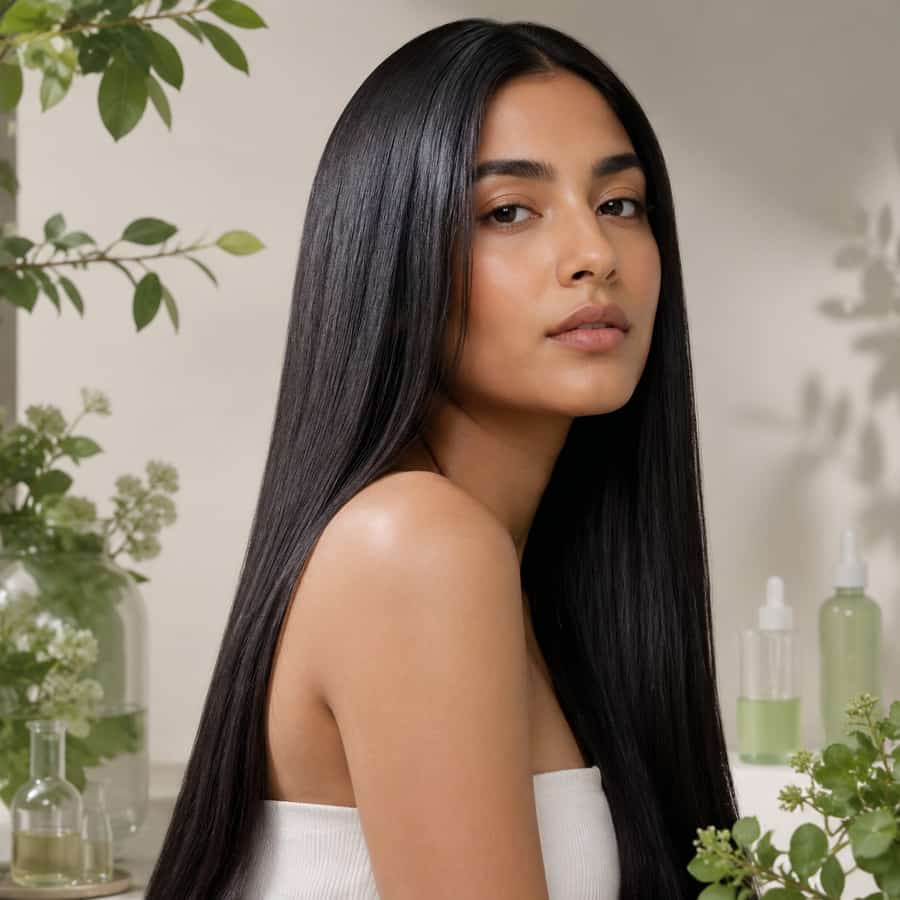
Hair serums can meaningfully improve straight hair routines when product weight, application timing, and wash frequency align with your goals. This guide collects serum picks across every major concern — frizz, repair, growth, dryness, shine, heat protection, and color care — so you can compare options without guessing which formula fits your hair profile.
The biggest mistake with straight hair is choosing a serum by popularity alone. Match the formula to your primary concern first, then adjust dose and placement. Most disappointing results come from overapplication or using a heavy serum where a lightweight finish is needed.
How straight hair behaves with leave-in serums
Straight hair typically shows visible oil migration to the roots, shine that shows every streak of product, and static flyaways along the crown. That profile changes which textures succeed. A serum that looks glossy in a bottle can still fail on day two if it migrates, flakes under gel, or leaves ends greasy while mid-lengths stay dry.
Porosity and density matter as much as the concern on the label. High-porosity lengths drink thin serums fast and may need a light seal after; low-porosity surfaces reject heavy oils and prefer sprayable or ester-light formulas. If your wash day already includes cream and gel, treat serum as the slip or seal layer — not a third heavy coating.
What to look for on straight hair
Prioritize formulas that solve your top concern without fighting your density. For straight hair, that usually means shine polish, frizz as static, and heat protection for daily blow-dries. Read the first five INCI ingredients: if oils dominate and your crown collapses easily, choose a lighter polymer or silicone-ester blend instead.
Texture cues beat marketing claims. Look for words like lightweight, leave-in, humidity shield, or heat protectant with a stated temperature rating when tools are involved. Be skeptical of “one drop for all hair” claims — straight hair usually needs a dose strategy, not a viral shortcut.
Starter pick on this hub: Kerastase Elixir Ultime. Use it as a reference texture, then open a concern-specific ranking when you need a full shortlist.
How to dose and place serum on straight hair
Start with a few drops warmed in palms, pressed onto mid-lengths and ends only. Warm the product between palms and press — do not rub — through damp mid-lengths and ends. Keep strand serums off the scalp unless the product is explicitly a scalp treatment.
On refresh days, a micro-dose on dry ends is usually enough. If hair feels coated by day two, cut the wash-day amount by about 30% before switching products. Track feel on wash day, day two, and day three for two weeks before judging a formula.
Avoid: root application, overnight oil-heavy leave-ins, and combining serum with dry shampoo on the same lengths.
Concern map for straight hair
Start with a concern guide when you want the full routine, or open a ranked product list for this hair type:
- Frizz and flyaways → frizz serum for straight hair and the frizz concern guide
- Dryness and brittle ends → dryness serum for straight hair
- Breakage and chemical stress → damage repair serum for straight hair
- Heat styling → heat protect serum for straight hair plus the heat protectant how-to
- Color fade → color protection serum for straight hair
- Density and scalp goals → thinning & growth serum for straight hair — cosmetic support only; sudden patchy loss needs a professional
Technique pages that protect every concern: how to apply hair serum and how much serum to use. Format choice: serum vs oil.
Weekly routine framework
- Wash with a cleanser that does not strip your color or curl pattern unnecessarily.
- Condition for slip, rinse, then towel-blot to damp.
- Apply serum at the dose above, then style as usual.
- On non-wash days, refresh ends only.
- Once a week, note whether frizz, shine, or breakage improved without buildup.
If three of four checkpoints improve after 14 days, keep the serum and tune dose. If not, change weight or timing before replacing the whole routine.
Where to go next
Start with your primary concern — for example shine smooth serum for straight hair or frizz serum for straight hair. Technique matters as much as product choice: read how to apply hair serum before increasing dose. Browse the full best hair serums map when you want every concern in one place. Ingredient deep-dives such as argan oil in serums and keratin in serums explain why a formula feels light or heavy on straight hair.
Serum guides for straight hair
Best serums for Straight Hair
Frequently Asked Questions
Do straight hair serums differ from other hair-type formulas?
Yes — the best match depends on density, porosity, and how much product straight hair can absorb without buildup.
Where should I apply serum on straight hair?
Mid-lengths to ends for most leave-ins; scalp serums are the exception and should be applied in sections at the roots.
How much serum should straight hair use?
Start with a few drops warmed in palms, pressed onto mid-lengths and ends only. Adjust after one wash week based on day-two feel.
What concerns matter most for straight hair?
Usually shine polish, frizz as static, and heat protection for daily blow-dries. Open the matching ranked guide for product picks.
What should a serum for straight hair actually do?
On straight hair, a good serum matches density and porosity — enough slip or seal for the concern, without collapsing lift or leaving a coated second-day finish.
When should straight hair apply serum?
Most strand serums go on towel-dried hair after washing, before heat or air-dry styling. Scalp formulas go on a clean scalp. A micro-dose on dry ends can finish flyaways without re-saturating roots.