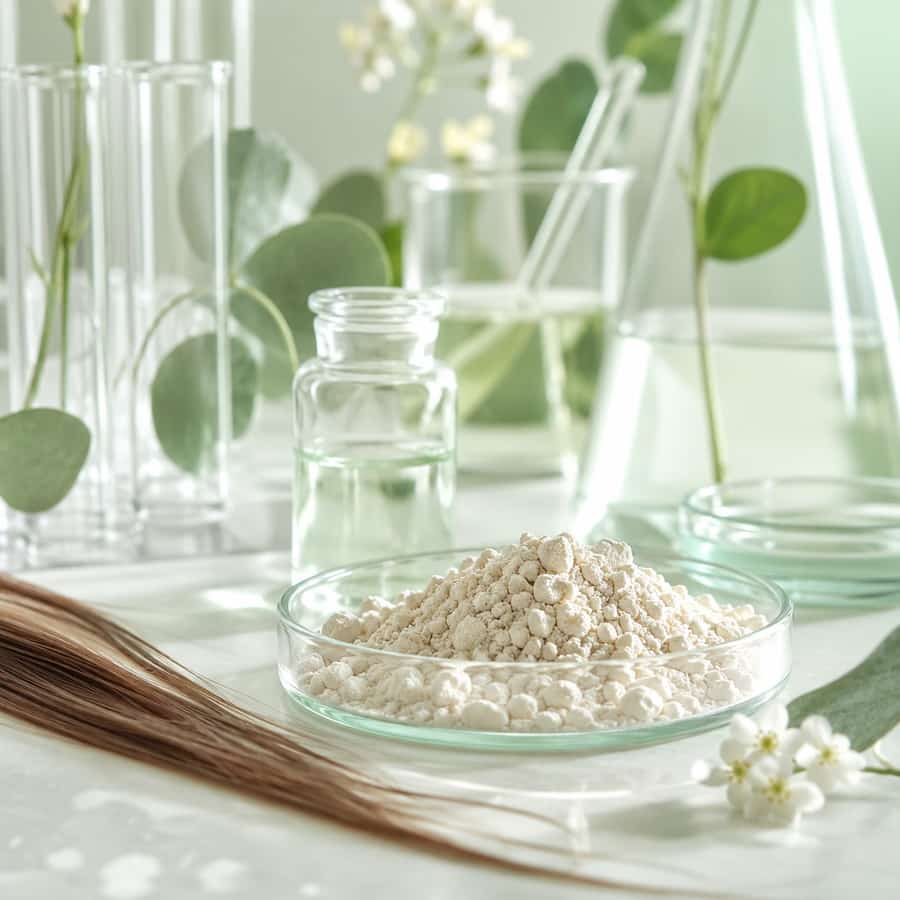
Keratin is the structural protein that gives hair its strength, elasticity, and resistance to breakage. In leave-in serums, hydrolyzed keratin and amino acid complexes temporarily fill gaps in lifted or damaged cuticles — improving smoothness, reducing frizz, and adding a polished finish without the commitment of a salon straightening treatment. This guide explains how cosmetic keratin works in serum formulas, which hair concerns it targets, how to dose it by texture, and which products deliver meaningful concentrations.
How keratin works in hair serums
Hydrolyzed keratin breaks down into smaller peptide chains that can adhere to the hair surface and partially penetrate the cuticle layer. This creates a temporary smoothing and strengthening effect — not a permanent structural change. When the cuticle lies flat, light reflects more evenly, which is why keratin serums are so often marketed for shine and frizz control.
Keratin serums work best on hair with lifted or damaged cuticles: color-treated strands, heat-styled ends, chemically relaxed or permed textures, and hair that snaps easily during brushing. The ingredient pairs well with silicones for humidity resistance and with lightweight oils for slip without heaviness. Many formulas also include silk proteins or wheat amino acids that complement keratin’s smoothing action.
It is important to distinguish cosmetic keratin serums from salon keratin straightening systems. Leave-in products deposit protein on the strand surface. Salon treatments use formaldehyde-releasing chemicals to permanently break and re-form disulfide bonds. The two categories solve different problems and should not be confused when reading labels or marketing claims.
Benefits and limitations
Keratin serums excel at reducing frizz, improving combability, and adding shine without the weight of heavy oils. They are versatile across hair types when dosed correctly and work as both daily leave-ins and pre-styling primers. Many formulas also include heat-protectant polymers, making them practical for blow-dry and flat-iron routines.
For color-treated hair, keratin can help seal the cuticle after chemical processing, slowing moisture loss and reducing the rough, porous feel that makes color fade faster. On heat-damaged ends, regular keratin serum use can reduce the snapping and splitting that makes lengths look thin and uneven.
Overapplication leads to buildup, especially on fine or low-porosity hair. Hair may feel stiff, straw-like, or coated rather than smooth. Keratin serums are not a substitute for bond-repair treatments on severely damaged hair — they smooth the surface but do not reconnect broken disulfide bonds inside the cortex. If your hair has been bleached multiple times or feels gummy when wet, reach for a peptide bond-repair serum instead.
Keratin by hair type
Fine hair: Use a pea-sized amount or less, applied only from the ears down. Avoid root application. Look for formulas where keratin appears alongside lightweight silicones rather than heavy oils. If hair feels flat within hours, cut the dose in half.
Thick and coarse hair: Can handle a dime-sized dose distributed in sections. Keratin helps tame the rough cuticle texture that makes coarse hair feel dry even after conditioning. Work through mid-lengths and ends with a pressing motion rather than rubbing.
Curly and coily hair: Keratin serums can reduce frizz and improve definition when applied on damp hair before gel or cream. Use sparingly — protein overload on curls creates a stiff, crunchy cast. One to two pumps per section is usually enough.
Color-treated hair: Keratin is generally safe and beneficial for sealing the cuticle post-color. Pair with sulfate-free shampoo to preserve both the protein deposit and your color investment.
Which concerns keratin supports
Keratin appears most often in serums targeting:
Browse the concern guides above for hair-type-specific product comparisons, or open a guide that matches your hair type.
How to use keratin serum
Apply on clean, towel-dried hair unless the product label specifies otherwise. Dispense a small amount — typically pea-sized for shoulder-length hair — warm between palms, and distribute through mid-lengths and ends using a pressing or gliding motion. Avoid rubbing, which creates friction and can worsen frizz on damaged ends.
For pre-styling use, apply keratin serum after rinse-out conditioner and before heat protectant or styling cream. If you flat-iron, ensure hair is completely dry before applying a second micro-dose focused on the sections receiving direct heat.
Start with less than you think you need and increase only after one full week of evaluation. Track texture on wash day, day two, and day three to judge whether the dose and timing are right. If hair feels stiff or straw-like after two weeks, you may be overdoing protein — reduce frequency to every other wash or switch to a moisture-focused serum.
Keratin vs other protein ingredients
Keratin is not the only protein found in hair serums. Silk protein adds slip and shine with less risk of stiffness. Wheat and soy proteins offer similar cuticle-smoothing benefits at lower cost. Collagen serums focus more on hydration than structural repair.
If you already use a protein-heavy conditioner or mask, you may not need a keratin serum on every wash day. Alternate between protein and moisture weeks — a common approach for curly and chemically treated hair that prevents the brittle, over-proteinated feeling.
Common mistakes with keratin serums
Applying to the scalp when the product is designed for lengths causes greasiness and flat roots. Using keratin serum on soaking-wet hair dilutes the product and reduces adhesion to the cuticle — towel-dry first. Layering multiple protein products (keratin serum plus protein mask plus protein leave-in) without adding moisture creates stiffness. Confusing leave-in keratin with salon straightening treatments leads to unrealistic expectations about permanence and smoothness.
Top products with keratin
1) It’s a 10 Miracle Leave-In Product
This cult-favorite leave-in ($17.99, 4.6 stars from 82,000+ reviews) combines hydrolyzed keratin with detangling agents and heat protection in a single spray-and-go format. It works across multiple hair types — from fine straight hair to curly textures — and handles frizz, shine, and heat protection without requiring a separate product for each concern. The main trade-off is a fragrance-heavy formula that may irritate sensitive scalps. Best for anyone who wants an all-in-one keratin leave-in at a mid-range price.
2) TRESemmé Keratin Smooth Shine Serum
At $5.99, this is one of the most accessible keratin serums on the market (4.3 stars, 15,600+ reviews). The keratin-infused formula targets frizz and adds a smooth, polished finish with built-in heat protection for blow-dry routines. It contains silicones, which help with humidity resistance but may require monthly clarifying on fine hair. Ideal for thick, straight, and curly hair on a budget — especially if you heat-style regularly and want keratin smoothing without salon pricing.
3) CHI Silk Infusion
CHI’s salon staple ($14.50, 4.5 stars, 19,800+ reviews) blends silk proteins with keratin for shine, strength, and heat protection during flat-iron use. The 6 fl oz bottle lasts months because a little goes a long way. It excels on thick, straight, and color-treated hair that needs smoothing and thermal protection. Very fine hair may find it slightly heavy — start with half the recommended dose and apply below the ears only.
What to look for on the label
Check that keratin or hydrolyzed keratin appears in the top half of the ingredient list — not just in marketing copy on the front of the bottle. “Keratin-enriched” claims with keratin listed last are marketing, not meaningful concentration.
Avoid formulas where alcohol denat sits above moisturizing ingredients if you have dry or damaged hair — the alcohol can counteract the protein’s smoothing benefit. For heat styling, look for explicit heat-protectant polymers like PVP/DMAPA acrylates copolymer alongside keratin.
Smart buying checklist
Before purchasing, evaluate fit through five filters:
- Ingredient concentration: Is keratin listed prominently, not at trace levels?
- Texture tolerance: Can your hair handle this serum’s weight at the recommended dose?
- Routine compatibility: Does the application method fit your wash and style schedule?
- Concern match: Does the formula target your primary goal, not just feature the ingredient?
- Cost per month: Will this remain practical after the first bottle runs out?
Keratin in professional vs at-home products
Salon keratin treatments and at-home keratin serums are often confused because they share an ingredient name. Professional treatments use formaldehyde or glyoxylic acid to permanently break and reform disulfide bonds — results last three to six months but involve chemical exposure and significant cost ($200–$400 per session). At-home keratin serums deposit hydrolyzed protein on the cuticle surface for temporary smoothing that washes out within one to two weeks. They are safe for home use, color-compatible, and reversible. If a product does not require a licensed stylist, ventilation, or a 48-hour no-wash period, it is a cosmetic serum — not a salon restructuring treatment.
Seasonal and climate considerations
Keratin serums perform differently across climates. In high humidity, keratin-plus-silicone formulas excel because the silicone layer blocks atmospheric moisture while keratin smooths the cuticle underneath. In dry winter air, keratin alone may not provide enough moisture — pair with a hydrating leave-in or hyaluronic acid serum to prevent the stiff, brittle feeling that protein-only routines can cause in low-humidity environments. Adjust your keratin serum frequency seasonally: every wash in summer humidity, every other wash in dry winter months.
Final take
Cosmetic keratin is one of the most reliable smoothing ingredients in leave-in serums when matched to the right concern and hair type. It will not permanently straighten hair or repair broken bonds, but it delivers visible frizz reduction, improved combability, and a polished finish that lasts until your next wash. Start with a lightweight formula, dose conservatively, and evaluate over two full weeks before adjusting. Use the concern links and product picks above as starting points — then let your hair’s response guide the final choice.
Where to go next
Product shortlists: best damage repair serum for color-treated hair, best frizz serum for curly hair, and best heat protect serum for thick hair. Also read damage repair and heat protect.
How this ingredient maps to concerns
Each bridge explains the mechanism — then links to the concern guide for hair-type product shortlists.
- Frizz
Hydrolyzed keratin temporarily fills lifted cuticle gaps so humidity has fewer entry points — useful when frizz comes from damage, not only weather.
- Damage & Repair
On heat- or color-stressed lengths, keratin fragments improve slip and reduce the rough feel that leads to breakage during detangling.
- Shine & Smooth
A smoother cuticle reflects light more evenly; keratin polish is cosmetic and wash-dependent, not a permanent straighten.
- Heat Protect
Keratin leave-ins improve slip under tools, but they are not a substitute for rated heat-protectant polymers when you flat-iron above 400°F.
Serum guides that use this ingredient
Frequently Asked Questions
Is keratin safe for color-treated hair?
Cosmetic keratin leave-ins are generally compatible; avoid confusing them with formal keratin straightening treatments.
Does keratin serum straighten hair?
No. Leave-in keratin serums smooth and strengthen temporarily — they do not chemically restructure hair like salon keratin treatments.
How often should I use keratin serum?
Most formulas work well after every wash. If hair feels coated, reduce dose or clarify monthly.
Can fine hair use keratin serum?
Yes — choose lightweight, silicone-balanced formulas and apply only on mid-lengths and ends.
What does Keratin do in a hair serum?
Keratin plays a specific role in serum formulas — hydration, seal, protein fill, or scalp support depending on the ingredient. Position on the INCI list and the rest of the formula matter more than front-label buzzwords.
How should I use a Keratin serum?
Follow whether the product is a strand leave-in or a scalp treatment. Apply the labeled dose to clean, appropriately damp or dry hair, and keep placement away from roots unless the formula is scalp-directed.