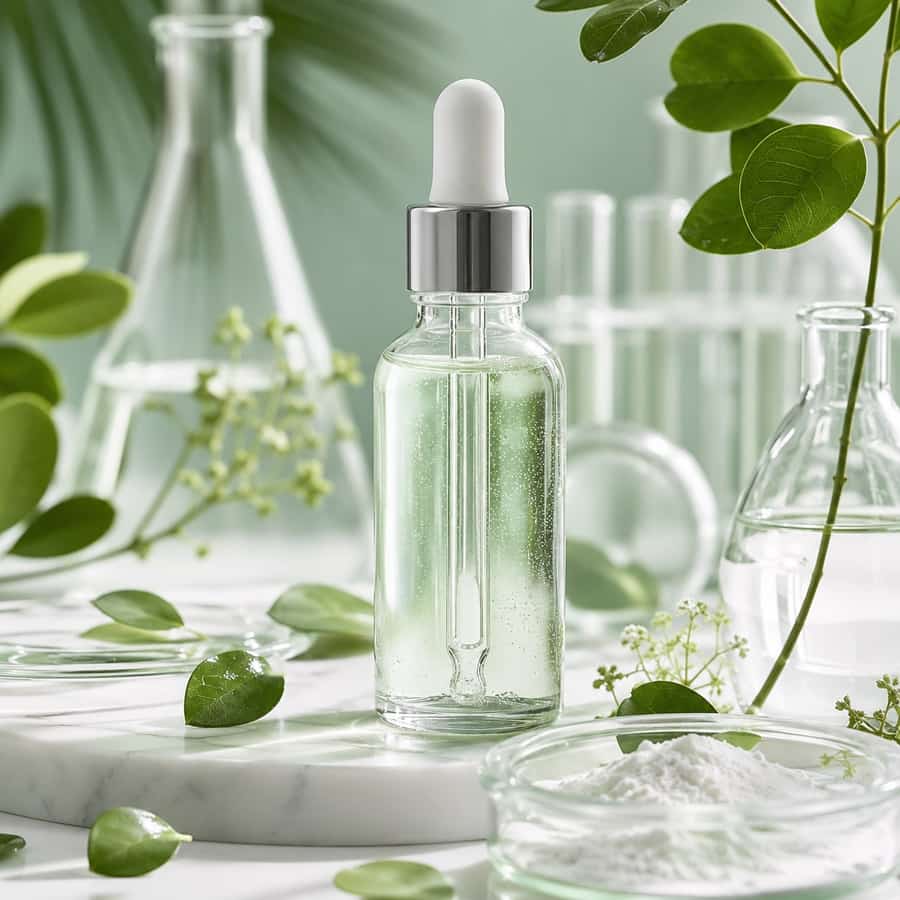
Niacinamide — vitamin B3 — built its reputation in skincare for barrier repair, oil regulation, and anti-inflammatory effects. Hair care brands have adopted it for similar reasons at the scalp: supporting a healthy follicle environment, reducing inflammation that contributes to shedding, and improving the conditions hair needs to grow. In leave-in strand serums, niacinamide helps regulate sebum and smooth the cuticle for frizz control. This guide explains how niacinamide works in both scalp and strand serums, which concerns it addresses, and how to choose an effective formula.
How niacinamide works in hair serums
At the scalp, niacinamide supports the lipid barrier that protects follicles from irritation and environmental stress. Research suggests it may help reduce dihydrotestosterone (DHT) activity at the follicle — the hormone linked to androgenic pattern hair loss. It also improves microcirculation when combined with massage during application, delivering more oxygen and nutrients to active growth zones.
In leave-in strand serums, niacinamide operates differently. It helps regulate sebum production along the hair shaft, which reduces the greasy-at-roots, dry-at-ends imbalance many people experience. It also contributes to cuticle smoothness, reducing the friction that causes frizz and tangling on humid days.
Concentration matters. Niacinamide at 2–5% is the range used in most effective skincare formulas, and hair serums targeting scalp health should list it prominently — not as the last ingredient before preservatives. Products that mention niacinamide in marketing but list it below fragrance are unlikely to deliver meaningful benefits.
Benefits and limitations
Niacinamide is well-tolerated across scalp types, including sensitive skin. It pairs effectively with caffeine, peptides, and botanical extracts in multi-active growth serums. For frizz control, it offers a lightweight alternative to heavy silicone serums — particularly valuable on fine hair that cannot tolerate dimethicone-heavy formulas.
On oily scalps, niacinamide helps regulate sebum without the drying effect of harsh clarifying treatments. On dry, flaky scalps, it supports barrier repair that reduces the inflammation cycle contributing to itch and shedding.
As a standalone ingredient, niacinamide is unlikely to reverse significant hair loss or advanced thinning. It works best as part of a comprehensive scalp care routine that may also include minoxidil, scalp exfoliation, and proper nutrition. For strand frizz, it is one tool among many — effective but not a replacement for humidity-blocking polymers in high-humidity climates.
Niacinamide by hair type
Fine hair: Niacinamide strand serums add frizz control without the weight of silicone-heavy alternatives. Living Proof No Frizz is a representative option. For scalp thinning, Nioxin System treatments combine niacinamide with caffeine for root support.
Thick and coarse hair: Scalp serums with niacinamide help maintain follicle health on dense scalps where product distribution is harder. Section hair carefully during application to ensure even coverage.
Curly and coily hair: Scalp health directly affects edge and temple retention — common problem areas for tight styles. Niacinamide scalp serums applied to affected zones may reduce inflammation-related shedding.
Color-treated hair: Niacinamide is color-safe and non-irritating for chemically treated scalps. It will not interfere with color molecules or accelerate fading.
Which concerns niacinamide supports
Niacinamide appears most often in serums targeting:
Browse the concern guides above for hair-type-specific product comparisons, or open a guide that matches your hair type.
How to use niacinamide serum
For scalp formulas: apply to a clean, dry scalp using a dropper along part lines. Massage for one to three minutes with fingertips. Do not rinse. Use daily or every other day per product instructions.
For strand formulas: apply a pea-sized amount to damp mid-lengths and ends after conditioning. Press into hair rather than rubbing. One application per wash day is sufficient — reapplying to coated hair causes buildup.
If combining scalp and strand niacinamide products, apply the scalp serum to dry roots first, then wash and condition as usual before applying the strand serum to damp lengths. The two application zones do not conflict.
Niacinamide vs other scalp actives
Minoxidil is the gold standard for regrowth with decades of clinical data. Caffeine targets DHT and follicle metabolism through a different pathway. Ketoconazole (in anti-dandruff shampoos) addresses fungal overgrowth that can contribute to shedding. Peppermint and rosemary oils stimulate circulation through sensory irritation.
Niacinamide complements these actives rather than replacing them. A strong growth routine might include minoxidil, a niacinamide-caffeine scalp serum, and a gentle sulfate-free shampoo.
Common mistakes with niacinamide serums
Using a strand frizz serum on the scalp — wastes product and may clog follicles. Expecting regrowth from a frizz serum that happens to contain trace niacinamide. Applying scalp serum to soaking-wet hair, which dilutes the active and reduces scalp contact. Skipping the massage step, which is when circulation benefits actually occur. Combining too many active scalp treatments simultaneously without patch testing.
Top products with niacinamide
1) Nioxin System 4 Scalp Treatment
A salon-trusted scalp treatment ($22, 4.4 stars, 22,100+ reviews) combining niacinamide with caffeine and botanical extracts for thinning, color-treated hair. It adds volume at the root and supports scalp health with daily use. The menthol scent is strong — refreshing for some, overwhelming for others. Best for fine, straight, and color-treated hair dealing with early thinning and scalp dryness.
2) Living Proof No Frizz Nourishing Styling Cream
This strand-focused formula ($29, 4.5 stars) uses niacinamide alongside the brand’s patented OFPMA molecule for frizz control and moisture balance. It works as a leave-in styling cream rather than a scalp treatment — apply to damp mid-lengths and ends. Ideal for fine and frizz-prone hair that needs humidity resistance without silicone weight. Not a growth product, but a strong example of niacinamide in strand care.
What to look for on the label
For scalp serums, niacinamide should appear in the top third of the ingredient list. For strand serums, it may appear lower but should still be above fragrance and colorants.
Check whether the product is designed for scalp application (dropper, “scalp treatment” language) or strand application (pump, “styling cream” language). These require different techniques and deliver different results.
Smart buying checklist
Before purchasing, evaluate fit through five filters:
- Product type: Scalp treatment for thinning, or strand serum for frizz?
- Ingredient concentration: Is niacinamide listed prominently, not at trace levels?
- Complementary actives: Does the formula include caffeine, peptides, or botanicals for synergy?
- Scalp tolerance: Does the formula contain menthol or essential oils that may irritate?
- Cost per month: Will this remain practical after the first bottle runs out?
Niacinamide in combination formulas
Niacinamide rarely appears alone in effective hair serums. The best formulas pair it with complementary actives: caffeine for follicle metabolism, peptides for growth signaling, rosemary for circulation, or OFPMA polymers for frizz control. When evaluating a niacinamide serum, read the full ingredient panel. A product with niacinamide plus three other scalp actives is more likely to deliver results than one featuring niacinamide as the sole active at trace concentration. Nioxin’s multi-ingredient approach exemplifies this — niacinamide, caffeine, and botanicals working together rather than any single ingredient carrying the full burden.
Research and realistic expectations
Niacinamide has extensive skincare research supporting barrier repair and sebum regulation. Hair-specific research is thinner but growing. Studies on topical niacinamide for hair focus on scalp health as a prerequisite for healthy growth rather than direct regrowth. Manage expectations accordingly: niacinamide improves the environment hair grows in; it does not create new follicles or reverse advanced pattern baldness. For frizz, the evidence is more experiential than clinical — users report smoother, less oily hair, but controlled trials specifically for hair frizz are limited. If frizz is your primary concern and niacinamide is the only active in a strand serum, consider whether a dedicated humidity-blocking formula might deliver faster, more visible results. Niacinamide strand serums work best as part of a multi-product routine rather than a standalone frizz solution.
Niacinamide dosage and formulation notes
Most effective niacinamide concentrations in skincare range from 2% to 10%. Hair serums rarely disclose percentage concentrations, so ingredient list position is your best proxy — niacinamide in the top third of the list suggests meaningful inclusion. Formulas that combine niacinamide with penetration enhancers (niacinamide itself aids absorption of other actives) may deliver better scalp results than single-ingredient products at the same concentration. Patch test new niacinamide scalp serums on a small area behind the ear before full application, especially if you have a history of sensitivity to B-vitamin skincare products. If redness or itching occurs, reduce application frequency to every other day before discontinuing entirely. Most niacinamide scalp serums are well-tolerated across skin types.
Final take
Niacinamide is a versatile B vitamin that supports scalp barrier health and strand frizz control through different mechanisms in different product types. It will not replace minoxidil for regrowth or a dedicated humidity-blocking serum for frizz in tropical climates — but it earns its place as a complementary active in well-formulated products. Match the product type to your primary concern (scalp vs strand), apply consistently, and evaluate over eight to twelve weeks for growth-related goals or two weeks for frizz-related goals.
Where to go next
See best thinning & growth serum for fine hair, best frizz serum for fine hair, and thinning & growth. Compare formats in scalp serum vs hair serum.
How this ingredient maps to concerns
Each bridge explains the mechanism — then links to the concern guide for hair-type product shortlists.
- Thinning & Growth
Niacinamide helps keep the scalp environment calmer and less congested — a prerequisite for growth routines, not a regrowth drug.
- Frizz
In strand formulas, niacinamide can improve surface feel and oil balance so fine hair looks less puffy at the crown.
Serum guides that use this ingredient
Frequently Asked Questions
What does niacinamide do for hair?
It supports scalp barrier health, may improve follicle environment, and helps regulate oil production.
Can niacinamide serum reduce hair loss?
It may support scalp conditions that contribute to shedding, but it is not a standalone regrowth treatment.
Is niacinamide safe for daily use?
Yes — most scalp serums with niacinamide are designed for daily or every-other-day application.
Niacinamide vs minoxidil — which is better?
Minoxidil has stronger clinical evidence for regrowth. Niacinamide supports scalp health as a complementary ingredient.
What does Niacinamide do in a hair serum?
Niacinamide plays a specific role in serum formulas — hydration, seal, protein fill, or scalp support depending on the ingredient. Position on the INCI list and the rest of the formula matter more than front-label buzzwords.
How should I use a Niacinamide serum?
Follow whether the product is a strand leave-in or a scalp treatment. Apply the labeled dose to clean, appropriately damp or dry hair, and keep placement away from roots unless the formula is scalp-directed.