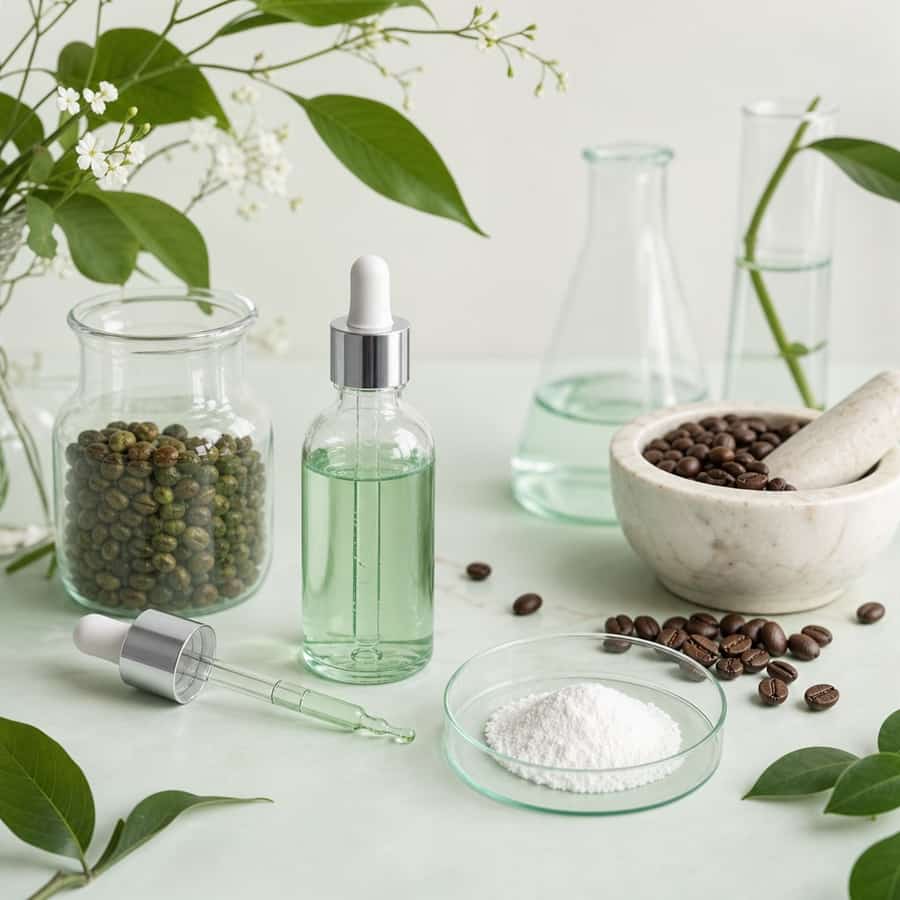
Caffeine is one of the most researched topical ingredients for hair growth support — and unlike many trendy actives, it has published studies behind it. Applied to the scalp, caffeine may counteract dihydrotestosterone’s (DHT) follicle-shrinking effects and extend the anagen growth phase. It will not replace minoxidil for significant regrowth, but it is a well-tolerated, affordable active that works synergistically with peptides, niacinamide, and botanical extracts. This guide explains the science, realistic expectations, application technique, and which caffeine serums deliver meaningful concentrations.
How caffeine works in hair serums
Laboratory studies suggest caffeine penetrates the hair follicle and stimulates cellular metabolism, potentially counteracting testosterone’s inhibitory effects on hair growth. In practical terms, caffeine serums aim to keep follicles in the active growth phase longer and reduce the miniaturization that causes thinning over time.
Caffeine works most effectively when left on the scalp for several hours — making overnight or leave-in application ideal. Washing it out immediately after application limits contact time and reduces efficacy. This is why caffeine appears almost exclusively in scalp serums (leave-on treatments) rather than rinse-out conditioners or shampoos, where contact time is measured in minutes.
Caffeine is frequently combined with niacinamide, peptides, and botanical extracts like rosemary and saw palmetto in multi-active growth formulas. These combinations target multiple pathways simultaneously: DHT modulation, follicle metabolism, scalp circulation, and barrier health.
Benefits and limitations
Caffeine serums are affordable, widely available, and easy to incorporate into morning or evening routines. They are generally well-tolerated — unlike minoxidil, caffeine does not typically cause an initial shedding phase or scalp irritation. The ingredient also has antioxidant properties that may protect follicles from environmental oxidative stress.
For early-stage thinning — increased shedding, a widening part, slower regrowth after illness or stress — caffeine serums offer a low-risk first step before committing to prescription treatments or expensive systems.
Caffeine alone is unlikely to reverse advanced hair loss or androgenic alopecia. Results require consistent daily application over months. Some formulas use caffeine as a marketing ingredient at concentrations too low to be effective — check that caffeine appears in the top half of the ingredient list, not buried below preservatives and fragrance.
Caffeine by hair type
Fine hair: Caffeine scalp serums can add perceived volume at the root by supporting follicle health. Nioxin System treatments are popular for fine, thinning hair. Apply to scalp only — not lengths.
Thick and coarse hair: Scalp coverage is harder on dense hair. Section into six to eight parts rather than four to ensure the caffeine reaches the scalp rather than sitting on top of hair.
Curly and coily hair: Edge and temple thinning from protective styling is a common concern. Apply caffeine serum directly to affected areas with a dropper, then massage gently. Avoid formulas with heavy oils that weigh down curls.
Color-treated hair: Caffeine serums are color-safe. Apply to dry scalp between wash days or after washing and air-drying — follow your specific product’s instructions.
Which concerns caffeine supports
Caffeine appears most often in serums targeting:
Browse the concern guide above for hair-type-specific product comparisons, or open a guide that matches your hair type.
How to use caffeine serum
Apply to a clean, dry scalp — not damp lengths. Part hair into four to six sections using clips. Place the dropper directly on the exposed scalp along each part line. Dispense three to five drops per section. Massage gently with fingertips (not nails) for one to three minutes to stimulate circulation and distribute the active.
Do not rinse. Leave on for at least four hours — overnight application is ideal for maximum follicle contact time. Use daily or every other day per product instructions.
If you also use minoxidil, apply minoxidil first, wait five to ten minutes for absorption, then layer caffeine serum. The two actives complement each other through different mechanisms.
Caffeine vs other growth actives
Minoxidil remains the gold standard with the strongest clinical evidence for regrowth. Finasteride (prescription) addresses DHT systemically. Rosemary oil showed comparable results to minoxidil in one small study. Peptides target follicle signaling through yet another pathway.
Caffeine sits in the “supporting active” tier — more evidence than biotin alone, less than minoxidil. The smartest approach combines caffeine with other proven or promising actives rather than relying on it solo.
Common mistakes with caffeine serums
Applying to wet hair or lengths instead of dry scalp — caffeine needs follicle contact, not strand coating. Rinsing out too soon after application. Expecting results in weeks instead of months. Using a caffeine shampoo as a substitute for leave-on serum — shampoo contact time is too short. Applying before bed without protecting your pillowcase — use silk or accept occasional staining from tinted formulas.
Top products with caffeine
1) Vegamour GRO Hair Serum
A plant-based growth serum ($52, 4.3 stars, 6,200+ reviews) combining caffeine with peptides and botanical extracts for thinning hair. Vegan, cruelty-free, and designed for daily scalp application with a dropper. Results require consistent use over weeks — the brand is transparent about timelines. Editor’s Pick for those who want a clean-beauty growth serum with caffeine as a primary active.
2) The Ordinary Multi-Peptide Serum for Hair Density
An affordable option ($17.90, 4.2 stars) that includes caffeine alongside multiple peptide complexes for scalp density support. Apply daily to dry scalp. The budget price makes it accessible for long-term trials without financial commitment. Best for early-stage thinning where you want caffeine plus peptides in one bottle.
3) Nioxin System 4 Scalp Treatment
A salon-trusted treatment ($22, 4.4 stars, 22,100+ reviews) combining caffeine with niacinamide for thinning, color-treated hair. Adds root volume and supports scalp health with daily use. The menthol scent provides a tingling confirmation of application. Best for fine and color-treated hair with early thinning signs.
What to look for on the label
Caffeine should appear in the top half of the ingredient list for scalp serums. “Coffee seed extract” or “green tea extract” may contain caffeine but at lower, less predictable concentrations than purified caffeine.
Confirm the product is a leave-on scalp treatment (dropper applicator, “do not rinse” instructions) rather than a rinse-out or strand product. Check for complementary actives — caffeine plus niacinamide, peptides, or rosemary is stronger than caffeine alone.
Smart buying checklist
Before purchasing, evaluate fit through five filters:
- Concentration: Is caffeine listed prominently, not at trace levels?
- Format: Leave-on scalp serum with dropper, not rinse-out shampoo?
- Complementary actives: Does the formula include peptides, niacinamide, or botanicals?
- Timeline: Are you prepared for eight to twelve weeks of daily application?
- Cost per month: Will this remain practical after the first bottle runs out?
Caffeine research summary
The most cited study on topical caffeine for hair growth (Fischer et al., 2007) found that caffeine stimulated hair follicle growth in laboratory conditions and counteracted testosterone’s suppressive effects on follicle activity. Follow-up research confirmed caffeine penetration into the follicle and extended anagen phase duration in ex vivo models. Human clinical trials are smaller and less definitive than minoxidil studies, but the mechanistic evidence is stronger than most botanical growth ingredients. This places caffeine in the “promising supporting active” tier — worth including in a growth regimen, but not sufficient as the sole treatment for significant hair loss.
Lifestyle factors that amplify caffeine serum results
Caffeine serums work best when follicles are already supported by healthy habits. Chronic stress elevates cortisol, which can push follicles into the resting (telogen) phase — no serum fully counteracts this. Tight hairstyles that pull on follicles (traction alopecia) cause mechanical damage caffeine cannot repair. Inadequate protein and iron intake limits the raw materials follicles need to produce hair, regardless of topical stimulation. Use caffeine serums as one layer of a comprehensive approach: gentle hair care, loose styles, adequate nutrition, stress management, and dermatologist consultation for progressive thinning. Track results with monthly photos rather than daily mirror checks to avoid discouragement from normal growth cycle variation. Hair sheds 50–100 strands daily as part of a healthy cycle — temporary increases during the first two to four weeks of a new growth serum are common and not necessarily a sign the product is failing.
Caffeine concentration guide
Effective caffeine serums typically list caffeine or coffee seed extract in the top third of the ingredient list. Concentrations around 0.2–1% are common in formulations backed by research. Products that mention caffeine in marketing but list it below fragrance, colorants, or preservatives are unlikely to deliver follicle-level benefits regardless of price or packaging.
Final take
Caffeine is a legitimate growth-supporting active with published research — not just a marketing buzzword. It works best as a daily leave-on scalp treatment combined with other actives, applied consistently over months. Set realistic expectations: it supports follicle health and may slow thinning progression, but it is not a minoxidil replacement for significant hair loss. The three products above span luxury clean beauty, budget peptides, and salon-trusted systems — pick the one that fits your budget and commitment level.
Where to go next
Start with best thinning & growth serum for fine hair, best thinning & growth serum for curly hair, and the thinning & growth concern guide. Application: scalp serum application.
How this ingredient maps to concerns
Each bridge explains the mechanism — then links to the concern guide for hair-type product shortlists.
- Thinning & Growth
Caffeine is among the better-studied cosmetic scalp actives for supporting follicle activity; expect months of consistent use, not overnight density.
Serum guides that use this ingredient
Frequently Asked Questions
Can caffeine serum help with thinning hair?
Caffeine is a cosmetic scalp active that may support follicle activity with consistent use, but results are modest compared with clinically proven treatments like minoxidil — it is not a cure for hair loss.
How do I apply caffeine scalp serum?
Use a dropper along part lines, massage for 1–3 minutes, and apply to a clean, dry scalp.
Can I use caffeine serum with minoxidil?
Many users combine them — apply minoxidil first, let it absorb, then layer caffeine serum.
How long before caffeine serum shows results?
Allow 8–12 weeks of daily use before evaluating density changes.
What does Caffeine do in a hair serum?
Caffeine plays a specific role in serum formulas — hydration, seal, protein fill, or scalp support depending on the ingredient. Position on the INCI list and the rest of the formula matter more than front-label buzzwords.
How should I use a Caffeine serum?
Follow whether the product is a strand leave-in or a scalp treatment. Apply the labeled dose to clean, appropriately damp or dry hair, and keep placement away from roots unless the formula is scalp-directed.